

UNESCO World Heritage Sites in Sri Lanka: A Complete Guide for Travelers
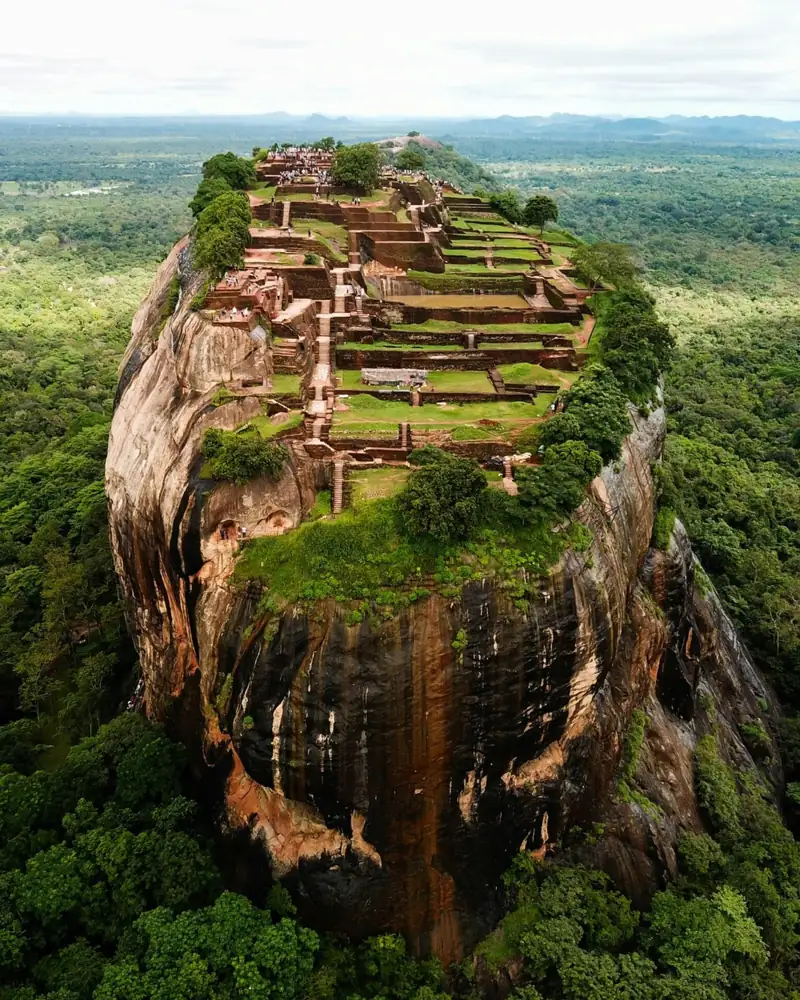
Sri Lanka packs an extraordinary volume of history, architecture, and natural wonder into a compact island. From towering granite fortresses and sacred ancient capitals to misty montane rainforests and coastal colonial bastions, the country presents a remarkable tapestry of human achievement and ecological richness.
Beyond its pristine tropical beaches lies an island shaped by over two millennia of Theravada Buddhist tradition, intricate royal civilizations, genius water engineering, and centuries of European maritime trade. Sri Lanka is home to eight UNESCO World Heritage Sites — six cultural and two natural — making it one of the most heritage-dense destinations in Asia.
How Many UNESCO World Heritage Sites Are There in Sri Lanka?
Sri Lanka is home to 8 UNESCO World Heritage Sites: 6 Cultural Sites and 2 Natural Sites.
This density exists because ancient Sri Lankan kingdoms developed sophisticated urban planning, spiritual centers, and vast irrigation networks that survived thousands of years — while the island’s isolated evolutionary geography preserved unique rainforest and montane ecosystems found nowhere else on Earth.
| UNESCO Site | Type | Location | Recommended Time |
| Sacred City of Anuradhapura | Cultural | North Central Province | 1 Full Day |
| Ancient City of Polonnaruwa | Cultural | North Central Province | 4–6 Hours |
| Ancient City of Sigiriya | Cultural | Central Province | 3–4 Hours |
| Sacred City of Kandy | Cultural | Central Province | 1–2 Days |
| Old Town of Galle & Fortifications | Cultural | Southern Province | 1 Day / Overnight |
| Rangiri Dambulla Cave Temple | Cultural | Central Province | 2–3 Hours |
| Central Highlands of Sri Lanka | Natural | Central & Sabaragamuwa | 2–3 Days |
| Sinharaja Forest Reserve | Natural | Sabaragamuwa & Southern | 1 Full Day |
1. Sacred City of Anuradhapura
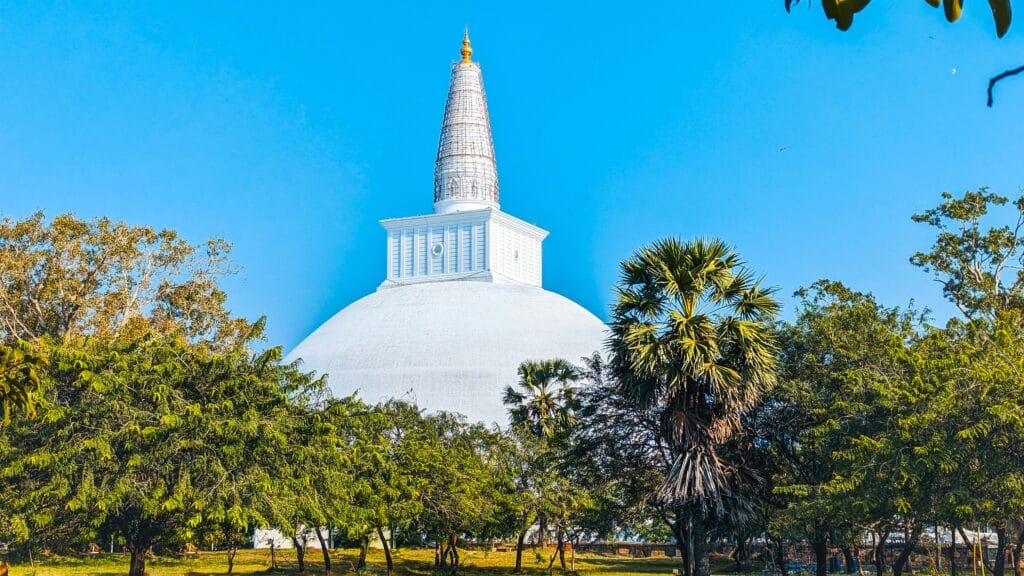
Established around the 4th century BCE, Anuradhapura served as Sri Lanka’s first royal capital and remained the epicenter of Sinhalese political and religious power for over a thousand years. It’s one of the world’s oldest continuously inhabited cities and a central pillar of Theravada Buddhism. Ancient engineers here mastered hydraulic civil engineering, building vast reservoirs that sustained sprawling monastic complexes and city populations.
Visiting feels like stepping into an open-air sanctuary where history remains actively lived — white-robed pilgrims walk quietly alongside ancient red-brick stupas, burning incense and placing lotus flowers under sacred trees.
Don’t miss:
- Jaya Sri Maha Bodhi — grown from a cutting of the original Bodhi tree in Bodh Gaya, it’s the oldest human-planted tree in the world with a known date (3rd century BCE).
- Ruwanwelisaya Stupa — a colossal white dome built by King Dutugemunu in the 2nd century BCE.
- Jetavanaramaya & Abhayagiri Monasteries — towering stupa complexes once among the tallest man-made structures in the ancient world, rivaling the Pyramids of Giza.
Good to know: Inscribed in 1982. Give it a full day, best explored by bicycle or private car. Shoulders and knees must be covered, footwear and hats removed before entering stupa courtyards — bring socks for the sun-heated stone paths. Pair it with Wilpattu National Park or Mihintale.
2. Ancient City of Polonnaruwa
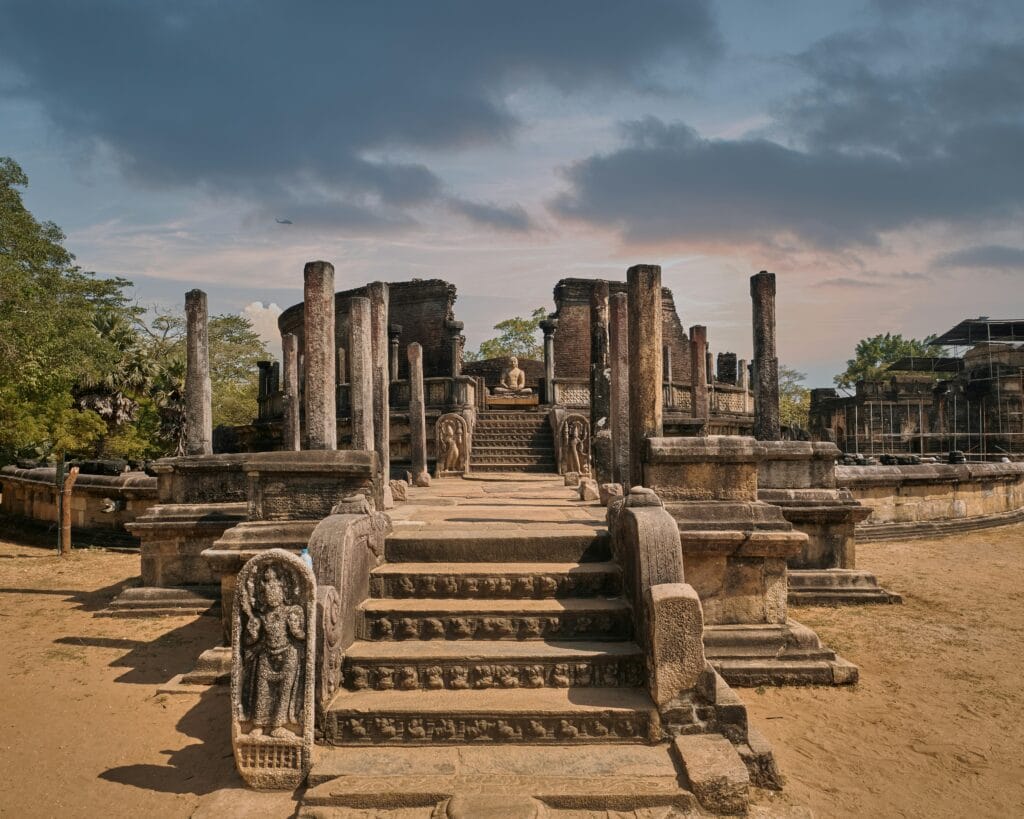
After Anuradhapura’s fall, Polonnaruwa rose as Sri Lanka’s medieval capital from the 10th to 13th centuries. Under King Parakramabahu I, it became a meticulously planned garden city of palaces, audience halls, royal baths, and reservoirs like the Parakrama Samudra (“Sea of Parakrama”).
Its stone structures are exceptionally well preserved, clearly showing the blend of Sinhalese Buddhist art with Chola South Indian influences.
Don’t miss:
- Gal Vihara — four massive Buddha statues carved into a single granite bluff, including a serene 14-meter reclining Buddha.
- The Vatadage — a circular relic house with moonstones and guardstones at its stone steps.
- The Royal Palace Complex — multi-story brick ruins of Parakramabahu’s royal quarters.
Good to know: Inscribed in 1982. Allow 4–6 hours. Renting a bicycle at the entrance is the classic way to explore the shady, tree-lined paths. Combine with Minneriya or Kaudulla National Parks for the famous elephant “Gathering.”
3. Ancient City of Sigiriya
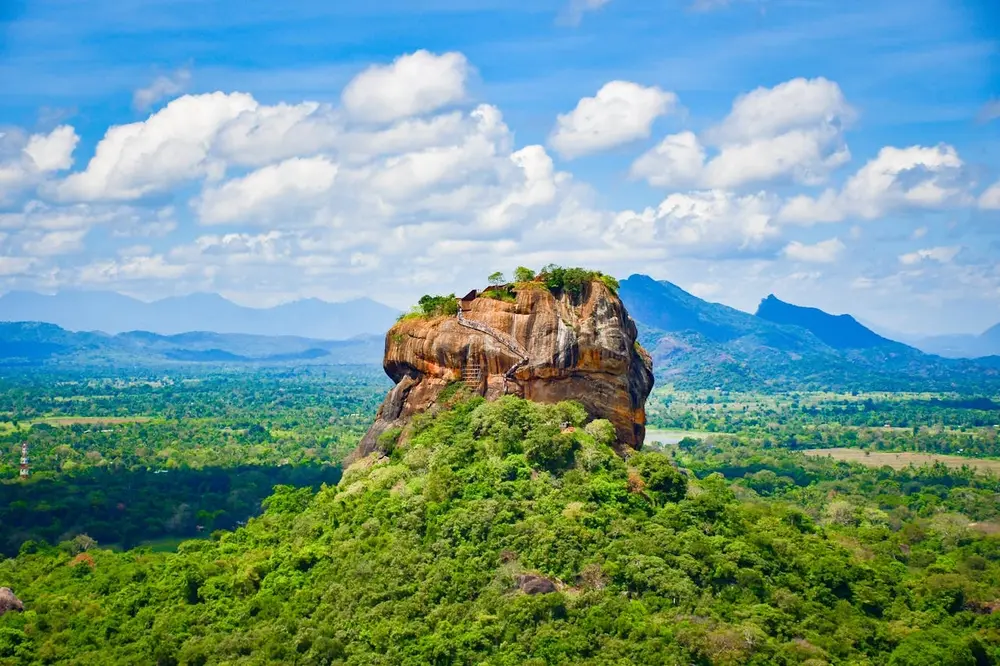
Rising nearly 200 meters above the plains, Sigiriya (Lion Rock) is a sheer granite fortress-palace built in the 5th century CE by King Kashyapa — one of the ancient world’s boldest feats of urban planning and structural engineering.
Getting to the top is a journey in itself: symmetric water gardens fed by ancient hydraulics, marble-paved staircases hugging the rock face, the giant carved lion’s paws marking the final ascent, and panoramic jungle views from the summit ruins.
Don’t miss:
- Sigiriya Frescoes — centuries-old wall paintings of celestial maidens (apsaras), preserved in a sheltered rock pocket.
- The Mirror Wall — once polished enough to reflect the king’s face, now covered in ancient visitor graffiti and poetry from the 7th–14th centuries.
- The Lion’s Paw Terrace — massive carved stone paws flanking the final staircase.
Good to know: Inscribed in 1982. Allow 3–4 hours. Start climbing by 7:00 AM to beat the sun and crowds; wear sturdy shoes and take your time on the metal staircases. Pair with Pidurangala Rock for sunset views back at Sigiriya.
4. Sacred City of Kandy
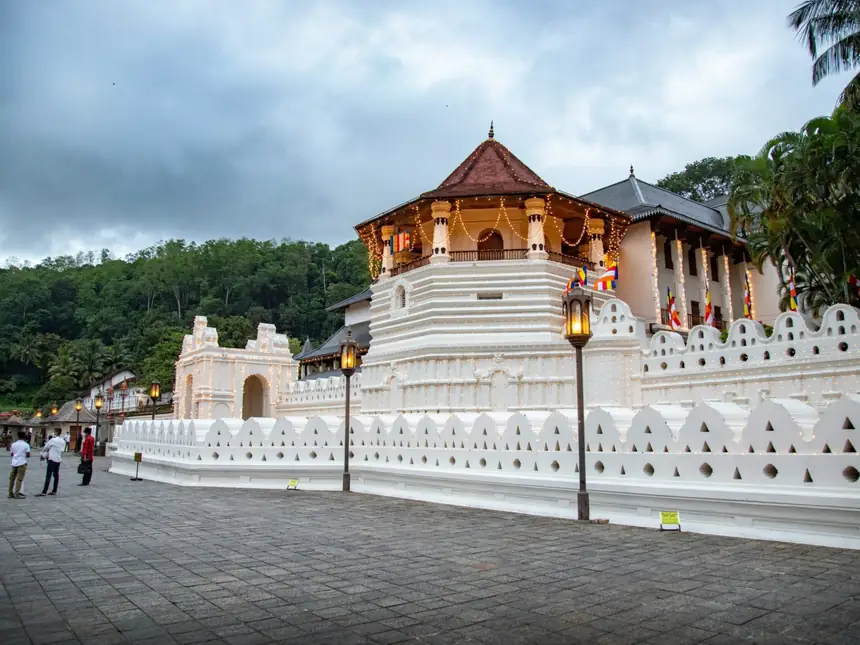
Nestled in misty hills, Kandy was Sri Lanka’s last independent kingdom, holding out against European powers for two centuries before falling to the British in 1815. Centered on a tranquil man-made lake, it’s still the island’s cultural and spiritual capital — home to the sacred tooth relic of the Buddha, and a living hub of Kandyan drumming, dance, and wood carving.
Don’t miss:
- Temple of the Sacred Tooth Relic (Sri Dalada Maligawa) — the gilded temple housing the relic in ornate golden caskets.
- Kandy Lake & Royal Palace Complex — scenic lakeside paths and the National Museum.
- Royal Botanic Gardens, Peradeniya — orchids, palm avenues, and giant bamboo groves just outside the city.
Good to know: Inscribed in 1988. Plan 1–2 days. Catch an evening Puja (prayer ritual) at the Temple of the Tooth. Combine with a scenic Hill Country train ride toward Nuwara Eliya and Ella.
5. Old Town of Galle and its Fortification
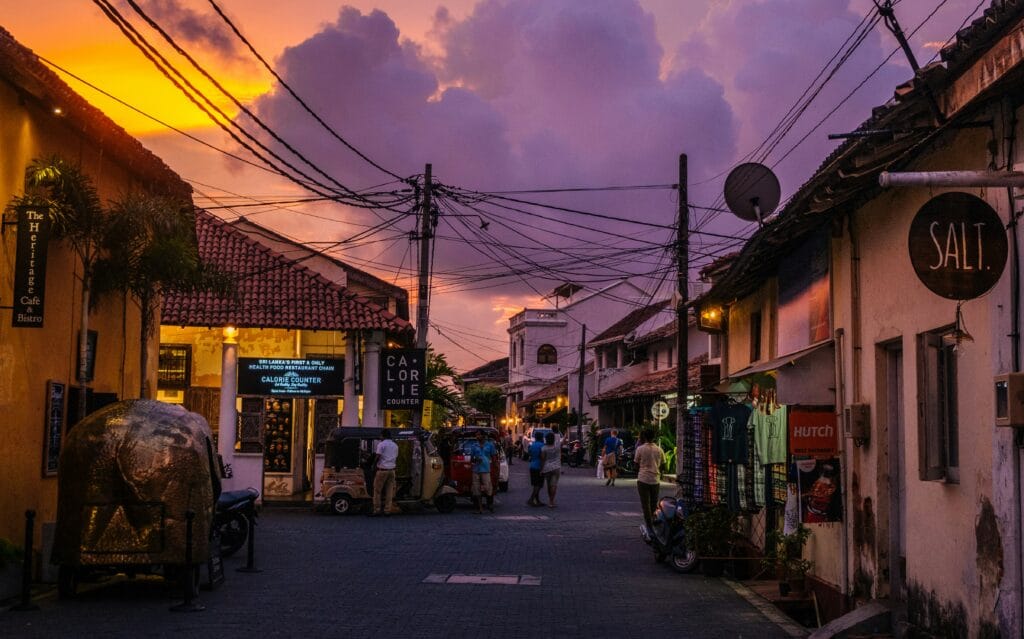
Galle Fort is the largest surviving European-built fortress in Asia — founded by the Portuguese in the late 16th century, massively expanded by the Dutch in the 17th, and later held by the British. Unlike a museum piece, it’s a living town: cobblestone streets lined with Dutch-colonial villas, churches, artisan shops, boutique hotels, and seaside cafés inside coral-and-granite ramparts.
Don’t miss:
- The Fort Ramparts & Galle Lighthouse — walk the walls at sunset for ocean views over red-tiled roofs.
- Dutch Reformed Church (Groote Kerk) — an 18th-century church with paved gravestones and original stained glass.
- Pedlar Street & Leyn Baan Street — restored colonial architecture, galleries, and spice shops.
Good to know: Inscribed in 1988. A full day, or better, an overnight stay inside the walls. Entirely walkable — best in early morning or late afternoon. Combine with south coast beach towns like Unawatuna, Mirissa, or Bentota.
6. Rangiri Dambulla Cave Temple
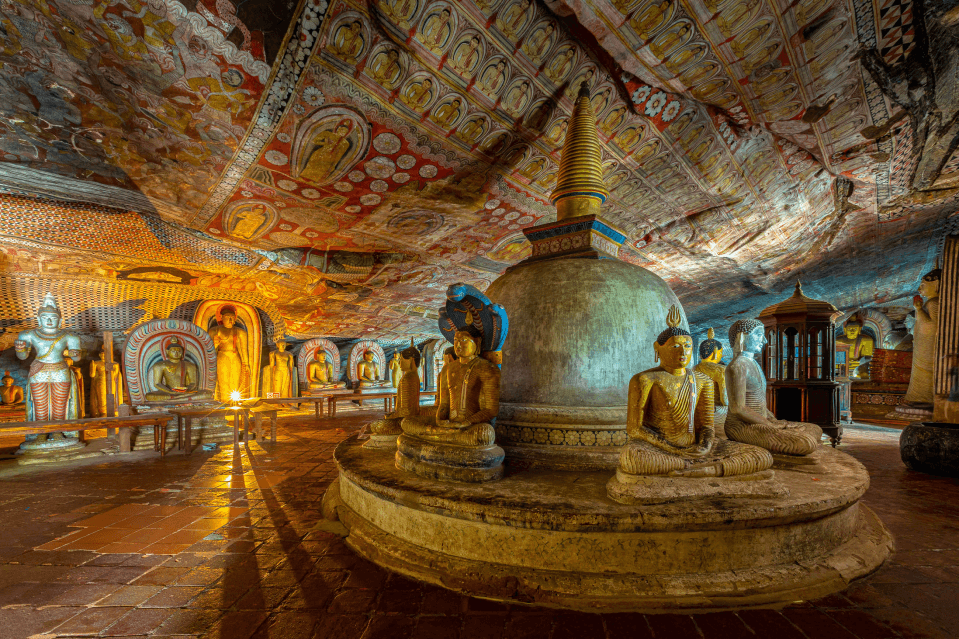
Dambulla is Sri Lanka’s largest and best-preserved cave temple complex, perched on a granite outcrop over 160 meters up. Monks sheltered here from the 3rd century BCE, later transforming the caves into rock shrines. Five caves hold over 2,000 square meters of murals depicting the Buddha’s life and Sinhalese history, alongside 157 statues.
Don’t miss:
- Cave 2 (Maharaja Viharaya) — the largest cave, with 50 statues and a spring that drips upward from the ceiling.
- Cave 3 (Maha Alut Viharaya) — a 14-meter reclining Buddha carved from the living rock.
- The summit plateau — wide views across the plains toward Sigiriya.
Good to know: Inscribed in 1991. Allow 2–3 hours. Shoulders and knees covered, shoes left at the entrance counter. Pair with Sigiriya or Popham’s Arboretum.
7. Central Highlands of Sri Lanka
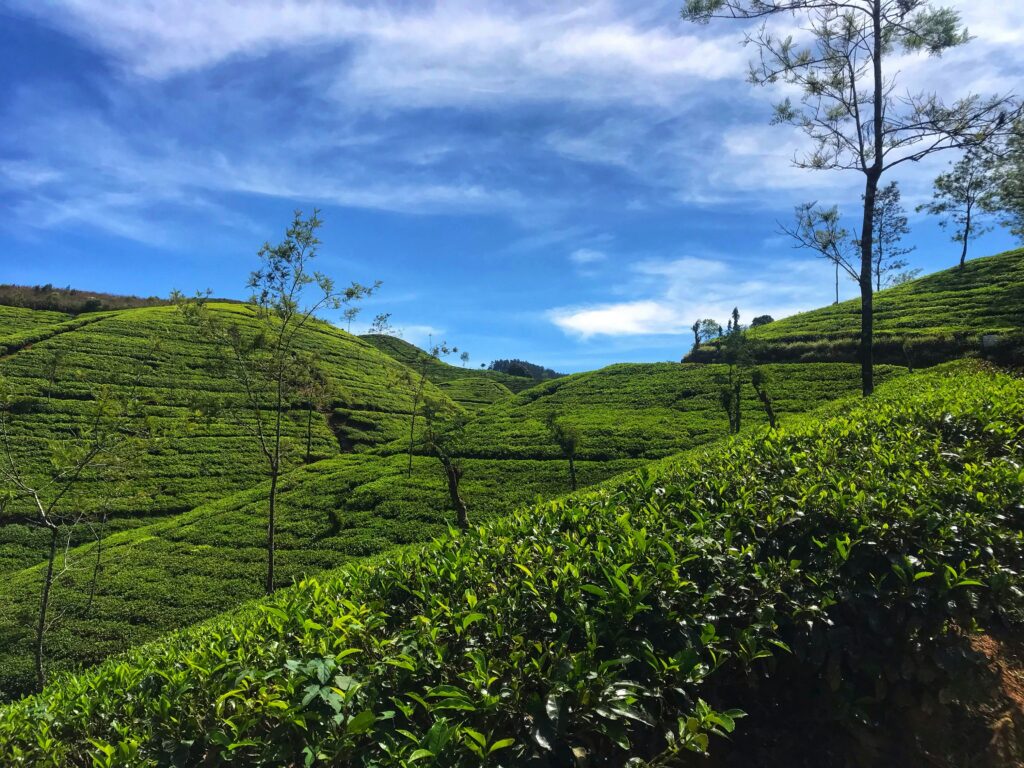
This Serial Natural World Heritage site combines three protected wilderness areas above 2,000 meters: Horton Plains National Park, the Peak Wilderness Protected Area (home to sacred Adam’s Peak), and the Knuckles Conservation Forest. It’s a global biodiversity hotspot, sheltering the endangered Sri Lankan leopard, purple-faced langur, and Horton Plains slender loris.
Don’t miss:
- Horton Plains & World’s End — a 9.5 km loop hike ending at an 880-meter cliff drop.
- Adam’s Peak (Sri Pada) — a night pilgrimage climb to catch sunrise over the mountain’s shadow.
- Knuckles Mountain Range — remote trails through dwarf cloud forests and waterfalls.
Good to know: Inscribed in 2010. Give it 2–3 days across regions. Pack layers and waterproofs — high altitude means cool, windy, wet weather. Combine with Nuwara Eliya tea country and Hill Country rail journeys.
8. Sinharaja Forest Reserve
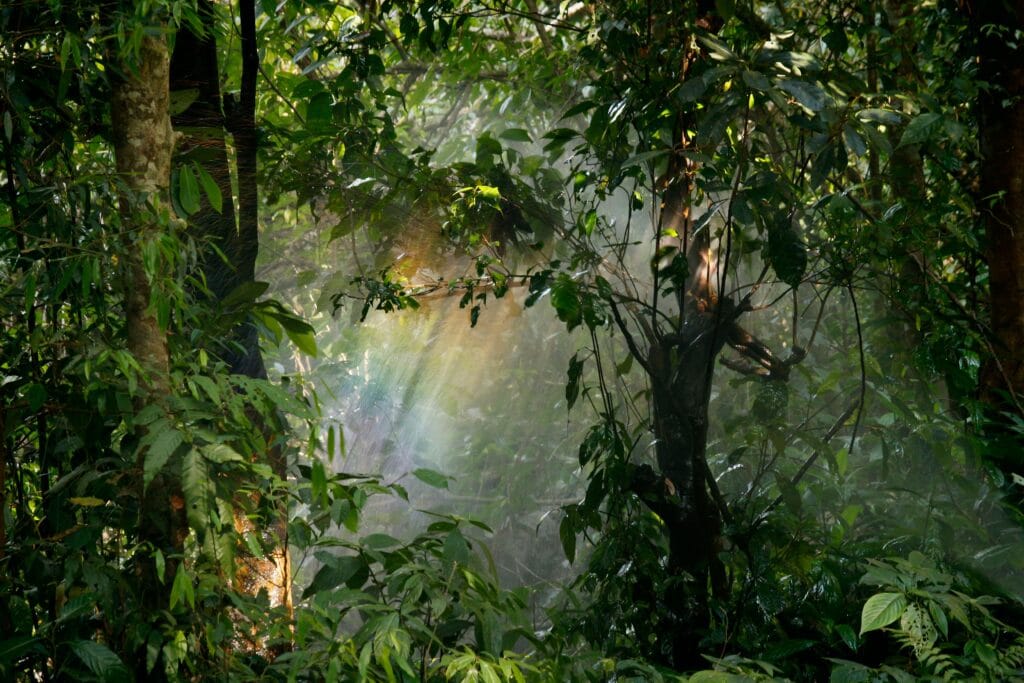
Sinharaja (“Lion King”) is Sri Lanka’s last viable stretch of primary tropical rainforest — a refuge that survived centuries of clearing. Unlike the dry-zone safari parks (Yala, Udawalawe), it’s explored on foot: guided treks through dense, multi-layered canopy, giant dipterocarp trees, streams, and fern valleys.
Don’t miss:
- Endemic birding — home to over 95% of Sri Lanka’s endemic bird species, famous for “mixed-species feeding flocks.”
- Endemic wildlife — the Sri Lanka blue magpie, red-faced malkoha, purple-faced langur, and rare amphibians.
- Nature trails & waterfalls — swimming spots like Kekuna Ella and Pathan Oya.
Good to know: Inscribed in 1988. A full day for trekking. Stay on marked trails with an official guide, bring leech socks and eco-friendly repellent, and leave no trace. Combine with southern beaches or Udawalawe National Park.
Best Sites for Different Kinds of Travelers
- First-time visitors: Sigiriya — striking landscapes, history, and iconic photos in one visit.
- History & archaeology lovers: Anuradhapura & Polonnaruwa — deep ruins and ancient engineering.
- Buddhist culture & sacred heritage: Kandy, Dambulla & Anuradhapura — living worship, murals, and relics.
- Architecture & colonial history: Galle Fort — walkable Dutch-colonial streets and ocean views.
- Nature lovers & birdwatchers: Sinharaja Forest Reserve — unspoiled rainforest, rare endemics.
- Outdoor enthusiasts & hikers: Central Highlands — cloud forest trails and World’s End.
How to String It All Together
Sri Lanka’s Cultural Triangle sites (Anuradhapura, Polonnaruwa, Dambulla, Sigiriya) sit close together, making them easy to combine. From there, most travelers head to Kandy (gateway to the Hill Country), then the Central Highlands, down to Sinharaja, and finally the south coast at Galle Fort.
A few practical tips:
- A private vehicle with a local chauffeur-guide is the easiest way to cover the Cultural Triangle and Hill Country.
- Visit big outdoor sites — Sigiriya, Anuradhapura, Horton Plains — at sunrise to dodge the midday heat and crowds.
- At active religious sites, cover shoulders and knees, and remove hats and shoes before entering sacred ground.
- Pack breathable cotton clothing, comfortable walking shoes, sunscreen, a reusable water bottle, and socks for hot temple stone.
Sample Itineraries
5-Day Heritage Highlights Colombo → Dambulla & Sigiriya → Polonnaruwa → Kandy → Galle Fort → Departure.
7-Day Cultural & Heritage Journey Anuradhapura → Sigiriya → Dambulla → Polonnaruwa (+ Minneriya safari) → Kandy → Galle Fort (via the coast) → Departure.
10–14 Day Grand Heritage & Nature Journey Anuradhapura → Sigiriya, Dambulla & Polonnaruwa → Kandy → Central Highlands (tea country + Horton Plains) → Sinharaja → Galle Fort → Colombo → Departure.
Best Time to Visit
- Cultural Triangle: Dry most of the year; best December–September, with the heaviest rain in October–November.
- Kandy & Central Highlands: Coolest and clearest December–April — ideal for Horton Plains hikes.
- Galle & the south coast: Best beach weather November–April; southwest monsoon rains hit May–September.
- Sinharaja: Rains year-round, but drier trekking windows fall December–March and July–August.
Responsible Heritage Tourism
- Keep noise low near active shrines, avoid turning your back to Buddha statues for photos, and ask before photographing worshippers.
- Never touch ancient frescoes or carvings — skin oils degrade fragile pigments and brick over time.
- Stay on marked trails in Sinharaja and the Central Highlands, pack out all trash, and don’t feed wildlife.
- Hire certified local guides and buy handcrafted items directly from village artisans.
Ready to Plan Your Trip with Hopscotch Travels ?
Exploring Sri Lanka’s UNESCO World Heritage Sites is a journey through ancient engineering, sacred art, and tropical biodiversity — rock fortresses at dawn, fortified coastal streets, and cloud forest treks, all on one small island.
Hopscotch Travels designs personalized itineraries across Sri Lanka, pairing private chauffeur tours and boutique stays with heritage exploration, wildlife safaris, tea country rail journeys, and coastal retreats. Contact our Sri Lanka travel specialists today to start planning your trip.